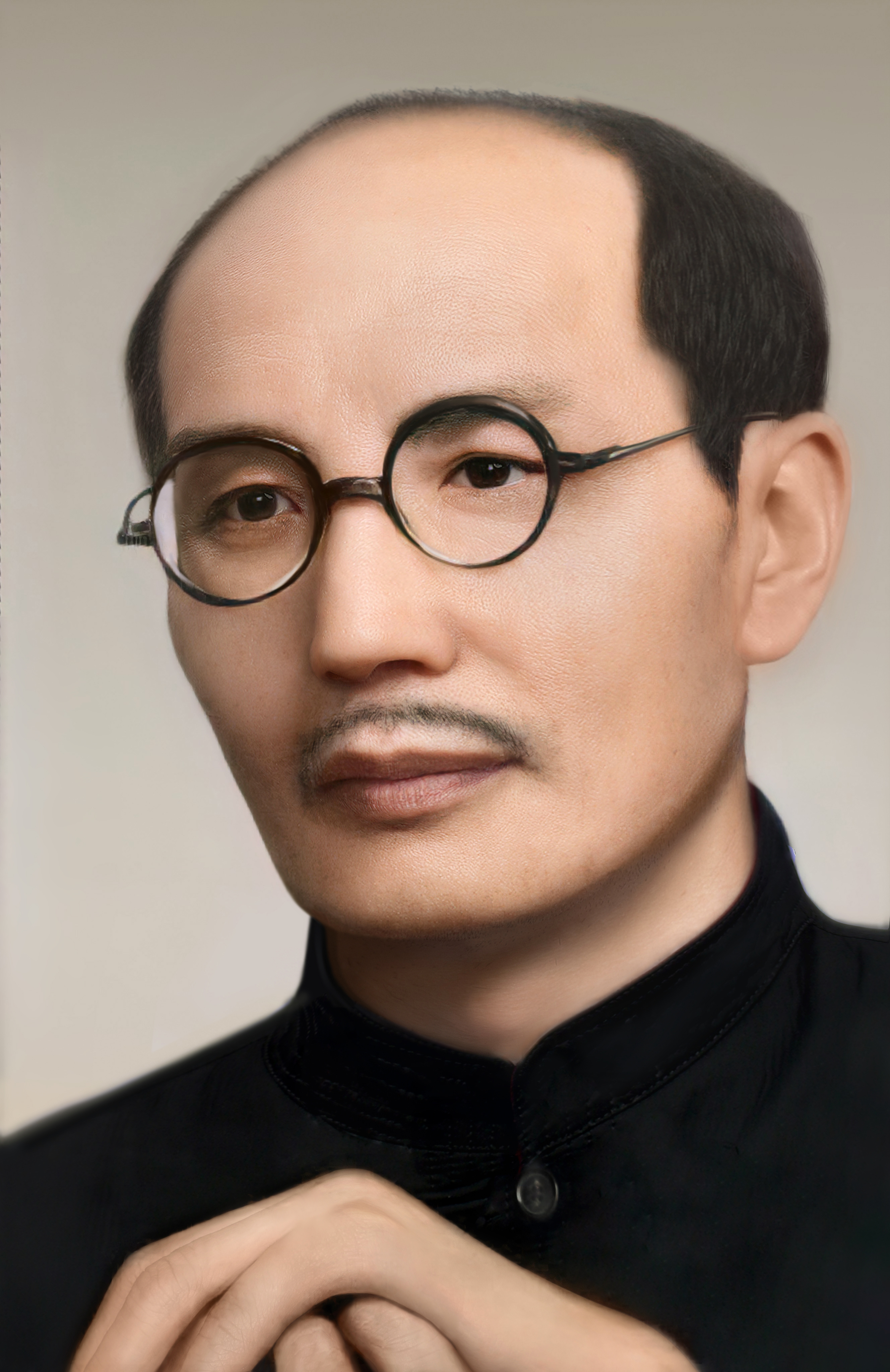
Venerable Master Dayu
First Patriarch of the Heart-of-Heart Dharma Lineage
| 大愚阿阇黎,武汉李氏子,俗名叔倍。参政于军阀割据时期,目睹诸军阀为争霸称王,抢夺地盘,互相残杀,掳掠民财,置国家危亡、生灵荼炭于不顾。于痛心疾首之余,乃奋而弃官出走,至庐山东林寺出家。 | Acharya Dayu was a son of the Li family of Wuhan. His secular name was Shubei. He served as an official during the period of warlord separatism. Witnessing the warlords fighting for hegemony and territory, killing one another, plundering the people's wealth, and disregarding the nation's peril and the devastation of the people, he was overcome with anguish. He resolutely abandoned his official post and left home to become a monk at Donglin Temple on Mount Lu. |
|---|---|
| 初修净土法门,后拜经,大病几死,继遇盗又几死,虽屡遭厄难,曾不稍懈。嗣感人生苦短,佛法难遇,乃发奋修般舟三昧。 | He first practiced the Pure Land method, then bowed while reciting sutras. He fell gravely ill and nearly died, and later encountered bandits and nearly died again. Despite repeated calamities, he never slackened in the slightest. Later, moved by the brevity of life and the rarity of encountering the Buddha-Dharma, he resolved to diligently practice the Pratyutpanna Samadhi. |
| 三、五日后,双腿浮肿,寸步难移,师为贯彻初衷,决不后退,咬紧牙关,用手爬行。一、二日后,两手也相继浮肿,每进一步,须付莫大艰巨的努力,个中苦难实非常人所堪忍受。 | After three to five days, both legs became swollen and he could not move a single step. To fulfill his original vow, the Master refused to retreat. Gritting his teeth, he crawled with his hands. After one or two more days, both hands also became swollen. Every inch forward required immense and arduous effort. The suffering involved was truly beyond what ordinary people could endure. |
| 故近代净宗行人绝少修此三昧,即修亦不能坚持到底。师于力尽爬不动时,立誓除死方休,以身滚动前进。经此一番艰苦卓绝的奋斗,偷心死尽,泯然深入大定,感普贤菩萨现身,为之灌顶,授以心中心密法。 | That is why modern Pure Land practitioners rarely practice this samadhi, and even if they do, they cannot persevere to the end. When the Master had exhausted his strength and could no longer crawl, he vowed to die rather than stop, and rolled his body forward. Through this extraordinarily strenuous struggle, his stealing mind died completely, and he quietly entered deep samadhi. He perceived Samantabhadra Bodhisattva appear before him, confer empowerment upon him, and transmit to him the Mind Center Secret Dharma. |
| 并谓《大藏经》中原有此法,甚为善巧,可检而参学。师检之果然,乃按菩萨所授与《大藏经秘密仪轨佛心经品亦通大随求陀罗尼》(二卷,唐菩提流志译)所说之六印一咒修持。经七年苦行,成就下山,开印心法门,为印心宗之初祖。 | The Bodhisattva also said that this method already existed in the Tripitaka, was exceedingly skillful and expedient, and could be consulted and studied. The Master checked and found it to be so. He then practiced according to the six mudras and one mantra described in the Secret Ritual of the Buddha-Mind Sutra Chapter, Also Penetrating the Great Wish-Fulfilling Dharani (two fascicles, translated by Bodhiruci of the Tang Dynasty). After seven years of ascetic practice, he accomplished his goal and descended from the mountain, opening the Mind Seal Dharma door and becoming the first patriarch of the Mind Seal School. |
| 师下山后,为使世知有此善巧方便法门,所到之处,略显神通,大江南北无不为之轰动,当时求法者不下五、六万人,入室弟子近二百人。嗣之广大信众重神通而不重道,师乃易装归隐四川成都,嘱得其心髓之弟子王骧陆老居士嗣法传道,后人尊为印心宗第二祖。 | After descending from the mountain, in order to let the world know of this skillful and expedient Dharma door, the Master displayed a few supernatural powers wherever he went, causing a sensation throughout the regions north and south of the Yangtze River. At that time, no fewer than fifty or sixty thousand people sought the Dharma, and nearly two hundred became his close disciples. Later, as the vast number of believers valued supernatural powers over the Way, the Master changed his appearance and went into reclusion in Chengdu, Sichuan. He instructed his disciple Wang Xianglu, who had received the essence of his mind, to inherit the Dharma and transmit the Way. Later generations revered him as the Second Patriarch of the Mind Seal School. |
师约于50年代在其成都弟子家留诗一首: 拈花怎么传, 不妨密且禅, 归隐扬眉际, 相逢瞬目边。 一期从古棹, 三界任横眠, 临行无剩语, 珍重一声○。 置于砚间,不辞而别,至今不知所终。 | Around the 1950s, the Master left a poem at the home of his disciple in Chengdu: How is the flower transmitted? It may as well be Vajrayana and Zen. Retiring into seclusion at the raising of an eyebrow, meeting again at the blink of an eye. One lifetime follows the ancient oar, in the three realms one may lie freely. At parting, no remaining words, only a precious sound of the circle. He placed it on the inkstone and departed without farewell, and to this day no one knows where he went. |
| 师说法,贵直指心要,不立文字,其留传后世之著述,除早期所著《解脱歌》外,只此告别诗一首。(注:“○”读音同“圆”)癸酉初冬弟子元音敬叙。 | In expounding the Dharma, the Master valued pointing directly to the essence of the mind and did not rely on written words. Apart from the Song of Liberation written in his early years, the only writing he left to later generations is this one farewell poem. (Note: The circle is pronounced the same as the character for round.) Respectfully narrated by his disciple Yuanyin in the early winter of the Guiyou year. |